Need help reading our website?



The Singles Tax Report
How much more are single people paying to live in the UK?
Living alone in the UK isn’t easy. Many people are choosing to live alone, but the high cost of living makes it unaffordable for a lot of them. As a result, some move back in with family, share a flat with friends, or join a house share to cut costs. Even so, those who live alone are often stretched much tighter financially than people living with others, even if their day-to-day lifestyle looks the same.
According to the latest report from the Office for National Statistics, 8.4 million UK adults now live alone. This is becoming a rising trend, but living by yourself comes with an unofficial “singles tax” making everyday life more expensive.
To understand the scale of the issue, the team at Lowell analysed everyday living costs and debt data from across the UK, revealing how much more single people are spending each year for the same lifestyle as well as how debt and savings pressures shape their daily lives.
Read on below to explore the full report:
What is the singles tax?
The singles tax refers to the additional financial burden taken on by people who are single or living on their own. Unlike couples or households who can share rent, bills, and other everyday expenses, single people often have to cover the full cost themselves.
This “tax” isn’t an official levy, but the cumulative effect of higher housing costs, utility bills, insurance, and other essentials that don’t scale down for one person. As a result, even when living a similar lifestyle to someone in a shared household, single people can end up spending thousands of pounds more each year, leaving them stretched financially and sometimes limiting their ability to save.
The financial burden can push singles out of larger and more expensive metro areas, cause them to live in house shares, struggle to manage their debt or build an adequate savings pot.
What we did
To estimate the extra financial burden faced by a person living alone in the UK, Lowell analysed government data on the typical costs of rent, council tax, utilities (including broadband, water, electricity and a TV license), car insurance, groceries and subscriptions across cities nationwide.
We then compared these costs for couples versus single individuals. allowing us to calculate exactly how much more a person living alone is paying to maintain the same lifestyle.
We also used proprietary data on average debt levels and the proportion of people with emergency savings to find the locations where single people have the highest risk of being financially vulnerable.
Key findings

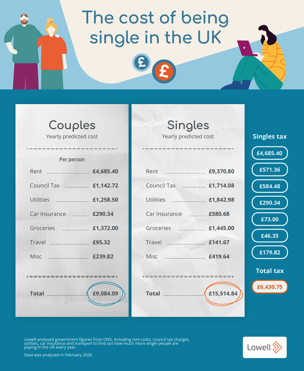
On average, single people are paying £6,430.75 more every year for the same life as their coupled-up counterparts.

The largest expense for single people is rental costs, averaging £4,685.40 more a year, followed by utilities and then council tax.

Londoners see the biggest singles tax, spending on average £11,606 more a year, almost double the UK average.

Singles living in London, Oxford and Brighton are most likely to fall into debt due to the singles tax.

Some Brits now even consider partnering up for the financial incentives, making finding a partner 2026’s biggest financial hack.


Almost a third of UK households are people living alone
Although it’s typical to think of people living in shared homes, whether that’s with a partner, in a flat share or with their family, the number of people living entirely on their own is actually growing.
According to data from ONS’ Families and households in the UK report, 8.4 million people in the UK lived alone in 2024. This represents 29.5% of all households, an increase of 7.6 million people since 2014, marking an 11% rise over the past decade.
Interestingly, a major driver of the rise in people living alone is older adults. Over half (51%) of people living alone in 2024 were aged 65 and over, up from 45% in 2014, reflecting the country’s ageing population. In contrast, the number of people aged under 65 living alone had remained largely unchanged over the same period. Among older adults, women are more likely to live alone than men, in part due to their longer life expectancy.
Cohabiting couples have also nearly doubled over the past two decades. The number of people living with a partner they haven’t married rose from 4 million in 2002 to 6.5 million in 2024, making it one of the fastest-growing household types in the country. However, these less legally secure relationships carry a higher risk of separation, meaning more people may eventually return to living alone, contributing to a cycle of solo living for many.
Single people are paying an average of £6k more every year
When analysing key everyday living costs across the country, single people are spending £6,430 more than their coupled-up counterparts every year. To put that into perspective, it’s the equivalent of an extra £124 a week, or roughly 10 hours of work each week, just to cover the basics.
The biggest expense for single people is rent accounting for an additional £4,685 per year. When renting a one-bedroom flat or house, the amount of space is the same whether you’re single or a couple. However, living alone means the cost falls entirely on one person, effectively doubling their share compared with a partnered household.
The second largest expense is utilities at an additional £584. Couples sharing the same space are likely to use the same amount of heating, electricity and similar amounts of water when compared to a single person who has to bear the brunt of this cost alone.
Council tax also accounted for a large additional charge. Although single people get a 25% reduction in council tax when they live alone, they’re still paying £571 more than a couple who can split the cost evenly.
Some cities see singles paying over £11k extra a year
When we look at the data at city-level we see that there are huge disparities in who the singles tax affects the most. The difference between the city with the lowest singles tax and the highest is a staggering £7,241, showing that where you live in the UK can give you just that much more spending power.
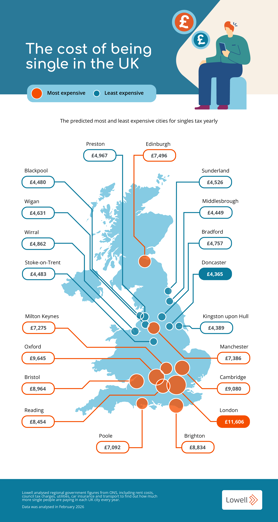
Unsurprisingly, London carries the highest singles tax in the UK, with solo residents paying £11,606 more than those in coupled-up partnerships. Rent alone accounts for almost £9,672 of this extra cost, which helps explain why many Londoners choose to live with family while saving, or opt for house shares to split expenses.
Oxford is the next most expensive for singles costing an extra £9,645 every year. This is followed by Cambridge with an additional cost of £9,080, indicating that southern cities with a higher cost of living are where singles feel the most financial burden.
Among the cheapest cities to live as a single person are those in the north of the country, including Doncaster with a single tax of £4,365, Hull with a tax of £4,389 and Middlesbrough costing £4,449 more.
The cities where singles are most likely to fall into debt
Although some cities have a higher singles tax, the debt burden on singletons in each city and the number of residents with emergency savings can give us a telling insight into those which are the most financially vulnerable.
Having a high amount additional to pay every year, along with rising debts and a risk that an emergency will push you deeper in debt means those singletons are less financially secure, affecting their ability to save, plan for the future, or absorb financial shocks.
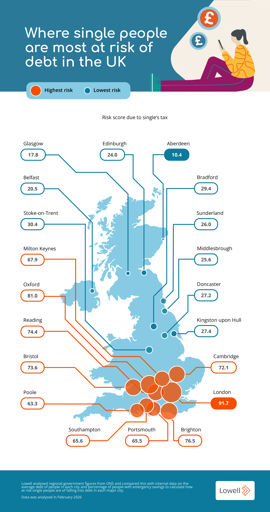
London is where singles have the highest risk of falling into debt. As well as having a singles tax well above ten thousand pounds, only 54.9% of people living in the city have sufficient savings for an emergency and an average debt of £1,860. Combined, these factors leave many singles financially stretched, with little buffer to absorb unexpected costs or lifestyle shocks.
Brighton breaks the top 3 when looking at the risk singles have of falling into debt. The seaside city has a singles tax of £8,834, paired with £2,010 of average debt and just 58.40% with sufficient emergency funds, meaning singles in the area are walking a tightrope between being financially comfortable and falling into debt.
Cities outside of England like Aberdeen, Glasgow, Belfast and Edinburgh all show the lowest debt risk for singletons. Many have lower debt rates than the rest of the UK, higher numbers of emergency savings and mid-range singles taxes putting them in a better financial position.
Singletons contribute £4.85 billion more to local councils
In England, over one in three households (34%) are eligible for the 25% single person council tax discount, showing how common living alone has become. The data shows that single people living alone aren’t just a small portion of the country and that there’s a large population affected by council tax policies that disproportionately impact those living alone.
While the discount offers some relief, single households still pay more per person than multi‑occupancy homes, meaning singles effectively contribute more on a per-capita basis to local government funding.
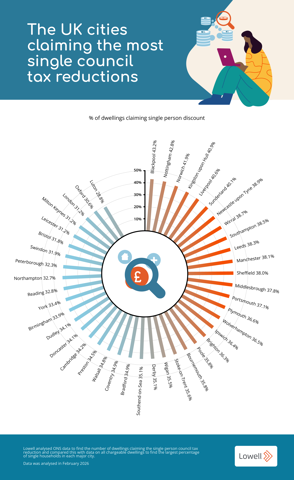
Living alone seems to be more common in the North with many cities above the national average of those claiming the singles persons council tax discount. Blackpool leads with 43.2% of those paying for council tax living alone, followed by Nottingham with 42.7% and Norwich with 41.8%
Down south, people are less likely to live on their own and claim the council tax reduction. In Slough, 26.1% of households claim the single person discount, followed by 26.4% in Wokingham and 26.5% on the Isles of Scilly.
When comparing the extra cost singles pay versus couples in each city, single households shoulder a significant financial burden. The average single household pays £571.36 more in council tax each year, meaning that singles collectively contribute an extra £4.85 billion to councils annually.
Some cities are paying more than others. In Birmingham, singles are paying a collective “singles tax” of £84.6 million, followed by Leeds at £73 million and Liverpool at £58 million. Across the country, more money is being contributed by people living alone, showing how council tax structures disproportionately impact single households.
How the singles tax impacts real lives
As rents soar, mortgages climb, and everyday costs rise, being part of a couple has quietly become one of the UK’s most effective ways to stay financially afloat. Single households, meanwhile, are shouldering these costs alone, from single parents paying thousands more in tax than dual-income couples, to ex-partners who can’t afford to move out after a split.
Here’s a look at how real people are coping with the high cost of going solo:

“My ex and I split earlier this year, and have agreed to live together for like the next 18 months or so because we have a mortgage together and life is too expensive for us to move out right now. We secured a new mortgage around November.
“Currently, we each pay £700 into a joint account that covers all household bills and our mortgage is £585 per month. Renting locally, a two-bedroom property costs a minimum of £1,325 per month, with a deposit of £1,528, and that’s for the lower end of “nice” properties. Rent alone would represent a 161.2% increase. I would go from paying £700 total to over £1,300 before even accounting for other bills, an increase of £625.
“Our current monthly bills are £54 for water, £109 for electricity, and £27 for gas. We split the cost of groceries down the middle, often saving money by buying larger packs. Living alone would increase the per-portion cost for both of us. Gas, electricity, and water costs would likely stay the same or decrease slightly.
“Our mortgage expired two months ago, so we are locked in for another two years at the current rate, and leaving early would require paying a repayment fee. Additionally, the house needs some repairs, and preparing it for sale would cost several hundred pounds. We currently share a car so one of us would need to buy a new vehicle if we moved out.
“Financially, it is literally impossible to separate right now. Her family has moved abroad, and my family has downsized, leaving neither of us with a backup plan. We separated at the end of 2025 but are likely to continue living together until at least the end of this year.”

“London only works financially because I live with a partner. If I ended up becoming single, I could probably only realistically afford to stay in London for a few months. Certainly under a year. It would also be somewhere either quite far out of the city, or a house or flat share a bit further in. Rent, mortgage, energy and food would definitely be the biggest financial burden.
"Accommodation costs are what has mainly made me consider leaving London. My wife and I pay just under £2,000 a month, plus bills, for a one-bed flat in New Cross (Zone 2). Our rent has risen by almost £400 in the past three years. We used to own a flat but sold it, and we’ve been renting for the last four years. Now we’re looking to buy again, but there’s nothing in our budget locally that feels worth it. We could move further out - but for the same money, or less, we could get something much nicer outside London altogether.
"The cost of going out is also extreme, although it has always been expensive. A pint is hurtling towards £8 in some places – not just Soho, I’m talking about neighbourhood gaffs.
“For single people to live comfortably in London, rent would have to come down by at least a third. But it won’t because it’s almost all private landlords and they charge what they can."

“As life becomes more expensive, single people definitely seem to be penalised in a lot of the decisions that are made, and that really needs reviewing since the number of single households is only set to grow.
“I’ve been a single mum for six years. I have two children, aged 14 and 12, and I work full time as a Director of a tech company earning just under £100k a year.
A couple earning the same amount as me between them will pay significantly less each year. I pay more in income tax and national insurance due to higher rate taxes. I also don’t receive any child benefit, while they will receive the full child benefit of £173.20 every four weeks, totalling £2,251.60 tax free each year.
“Overall, that means a couple earning the same total income as me are better off by £10,053.50 a year. Imagine if those of us impacted in this way suddenly had that extra £10,000 to spend and the difference it would make to our lives and our children’s lives. Knowing that I’m effectively £10,000 worse off every year simply for being single is incredibly frustrating.
“It seems unfair to penalise single parents who have worked hard to build their careers and become higher earners. We carry more risk because we rely on one income. We also have less childcare support because there’s only one parent to manage work and family life. Our needs aren’t any smaller, I still need a home the same size as a couple with two children, and aside from a 25% single-person council tax discount, there are no meaningful allowances to reflect that.
“I understand the privilege of being a higher earner. My life is comfortable, and I’m not denying that. I also don’t believe I should necessarily receive child benefit at my salary level. The issue is being penalised for being single. I believe sole-income households should have a higher tax-free allowance, and that child benefit should be based on household income. I certainly don’t think it’s fair that a couple paying far less tax than me can also receive a benefit that I’m not entitled to.”

“I separated from my ex-husband and moved out a month later, but we were still jointly on the mortgage. Overnight, I went from sharing costs to paying £850 a month in rent while also covering my £1,000 share of the mortgage.
“I borrowed initially from my mum to afford rent and then took out an £8,000 loan to move, buy furniture and cover deposits. I already had around £10,000 of existing debt, so I quickly became £18,000 in the red. Over the following year, I borrowed more from my mum just to stay afloat, taking my total debt to around £28,000.
“I moved jobs twice to try to reset, but the house with my ex still hasn’t sold. When the mortgage was renewed, we switched to interest-only and he took over payments, but by then the damage was done.
“A few months ago, already deep in my overdraft, I took out another £5,000 loan. I’m now around £30,000 in debt and paying nearly £750 a month in repayments, with no savings at all.
“I wish I’d sought financial advice when we split. I naively thought I could manage it on my own, but what I really needed was someone to check in with me weekly to help me build a budget, or even have one, and provide that friendly accountability.
“I didn't even think about how hard separating would be financially, I just moved out and assumed it would be ok. In hindsight it wasn't as the financial difference still has an impact on me today. We were living together for 9 years so you kind of forget what it's like on your own money wise.
Why single people can be more vulnerable to debt
John Pears, UK CEO at Lowell comments on how single people are more at risk of falling into debt:
“Living alone isn’t just expensive as we’ve found in our report. Those living in single occupancy homes are often more at risk of building debt or falling further into debt. The lack of emergency savings, taken up by increased premiums for rent, council tax and food make it harder for single people to be more financially secure.
“Single people also can’t spread costs if they lose their job. While couples can make up for each other's drop in income, single people immediately find themselves with no cash flow. If an appliance in their home breaks, they’re liable for the entire cost. Less disposable income means less savings to fall back on to mitigate income shocks or freedom to invest money to build future wealth.
“Although there are already some initiatives that help single people to manage their money, there’s more the government can do to support. Currently the single persons council tax discount is 25%, with many people calling for the discount to be increased to 50%. They could also provide credits for solo renters or homeowners to help offset higher per-person costs for essentials, utilities, and housing.
“Affordable housing is also a huge issue. Local councils should seek to increase the availability of single-occupancy affordable housing as we know one of the major costs for singles is renting.”
Final thoughts
Living alone can be a burden, especially when it comes to finances. The “singles tax” can leave many single adults more exposed to debt, higher living costs, and limited savings.
Fortunately, there are a variety of support services across the UK that can help individuals manage their finances, reduce debt, and protect their wellbeing.
- National Debtline – Offers free guidance by phone and webchat, including budgeting tools and tailored debt management plans.
- MoneyHelper – Government-backed service providing money and debt advice, calculators, and planning resources.
- Citizens Advice – Local centres and online support for debt, benefits, housing, and related financial issues.
- Shelter – Specialist advice on housing issues, including rent arrears and tenancy rights.
For independent support, visit Lowell’s Help & Support Hub for free, confidential debt advice from qualified professionals.
Methodology
This analysis examines the additional financial burden faced by people living alone in the UK, commonly referred to as the “singles tax”. It focuses on unavoidable household costs where sharing most clearly reduces per-person spending.
Two comparable household types were modelled for each major UK city: one adult living alone and two adults living together. Average city-level costs were gathered for rent, utilities, council tax, groceries, transport, and car insurance. In the two-adult household, shared costs were split evenly to calculate a per-person figure, which was then compared with the full cost paid by a single person living alone in the same city.
To provide context, Office for National Statistics data on families and households was analysed to assess trends in living arrangements, including the prevalence of single-person households by age group. Data on the average debt per person and percentage of people with an emergency fund came from Lowell’s own customer base.
All data was collected in January 2026.
Case studies featured in this research were developed from interviews with members of Heroine’s customer panel.